
In 2014, more than 68,000 unaccompanied minors were apprehended at the border, many of whom came to San Antonio. Immigration and Customs Enforcement (ICE) officials and San Antonio leaders scrambled to find a place for them. Ultimately, shelter was found at Lackland Air Force Base for 1,000 children ages 5-17. There, they could sleep and be fed while officials sorted through their individual situations and needs.
IWC founder Rev. Kelly Allen also wanted to help, but that was not allowed on the base. True to form, Kelly discovered a similar need off-base. Every day, ICE released mothers and children—asylum seekers—from a detention center in Karnes County. They were dropped at the curb in front of the San Antonio bus station with all their belongings in recyclable tote bags. Almost all were from Central America and spoke only Spanish. They had to communicate with desk agents and drivers about tickets their relatives had bought for them. Our culture was strange to them, and they had no grasp of the size of the US, or how long it would take to reach family or sponsors here. Many were facing several-days-long bus trips with no money or food.
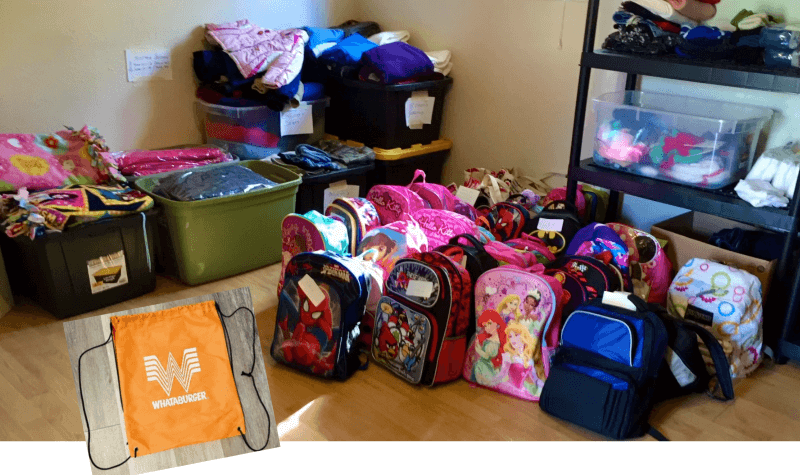
Kelly called on members of her congregation and asked other clergy to do so as well. Volunteers gathered whatever backpacks they could to fill with donated toiletries and stuffed animals. One volunteer was able to acquire Whataburger drawstring backpacks.
Some families had tickets with departures the following day and had no place to wait except the sidewalk. IWC rented the Casa de Maria y Marta from the Mennonite Church, and IWC and RAICES volunteers fed and sheltered the families there and drove them to the bus station when their time arrived. Others brought food to the bus station and welcomed them there, explained their tickets, and assisted in other ways. Fluent Spanish was prized (and still is) but gestures and high school Spanish accomplished many small miracles.
Though IWC no longer operates from the “Casa,” we still use a house with a candle flame over the doorway as our logo. Symbolically, we still want to say to asylum seekers, “We’ll keep a light on for you.”