By Joan Plotnick
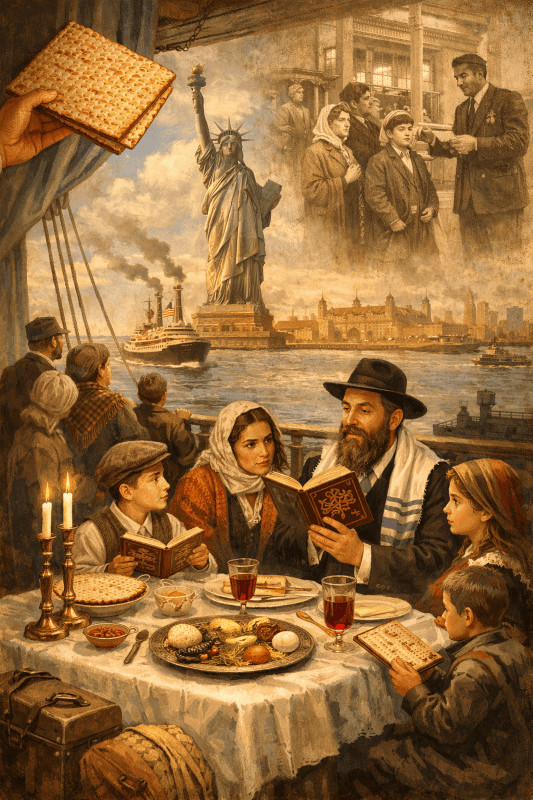
For Jews, the link between Passover and immigration is obvious. After thousands of years of slavery, we were finally free to pursue our lives according to our own beliefs. As we gained freedom, we are obligated to work toward the freedom of others. During the ritual seder meal and service, we are directed to imagine ourselves as refugees from ancient Egypt.
- How did we feel leaving our home behind?
- What was it like to wander in the desert for 40 years?
- What were we hoping for?
As Rabbi Elizabth Richman of American Jewish World Service (AJWC) said:
For generations, Jews on seder night have recounted our ancestors’ exodus from Egypt and their long walk to liberation. But this retelling is not just history. Today, we join millions of people around the world who are also journeying towards freedom.
The seder itself is full of symbolism reminding participants of the bitterness of slavery, as well as the joys and responsibilities of freedom. For example, Jews dip a green vegetable into salt water to symbolically taste the bitterness of slavery (salt water), mingled with the hope of freedom (spring vegetable). We spend the evening discussing how the story relates to the present-day plight of the enslaved, the oppressed, and the immigrant. We cannot eat regular bread for seven days, rather we must eat matzah (basically baked wheat and water), also called the “bread of affliction.” This reminds us that Jews had to leave everything behind in so much haste they couldn’t wait for the bread to rise. Jews recite the 10 plagues that finally convinced the pharaoh to free the slaves. Many modern-day Jews have replaced them with this list of more contemporary plagues including “the erosion of freedoms” and “neglect of human needs.”
As Rabbi Richman said,
As we taste tears in the saltwater and eat the bitter herbs, we remember that attacks on human rights are proliferating in our own country and around the world. As we recount the plagues, we know that racism, violence, poverty and hunger continue to plague our societies. And as we drink four cups of wine and raise our voices in song, we tell stories of freedom and prepare to take action as activists and allies.
חג פסח שמח (Chag Pesach Sameach): Happy Passover Holiday
Sources: